
The History of the No-Code Movement: From Visual Basic to AI-Powered Platforms
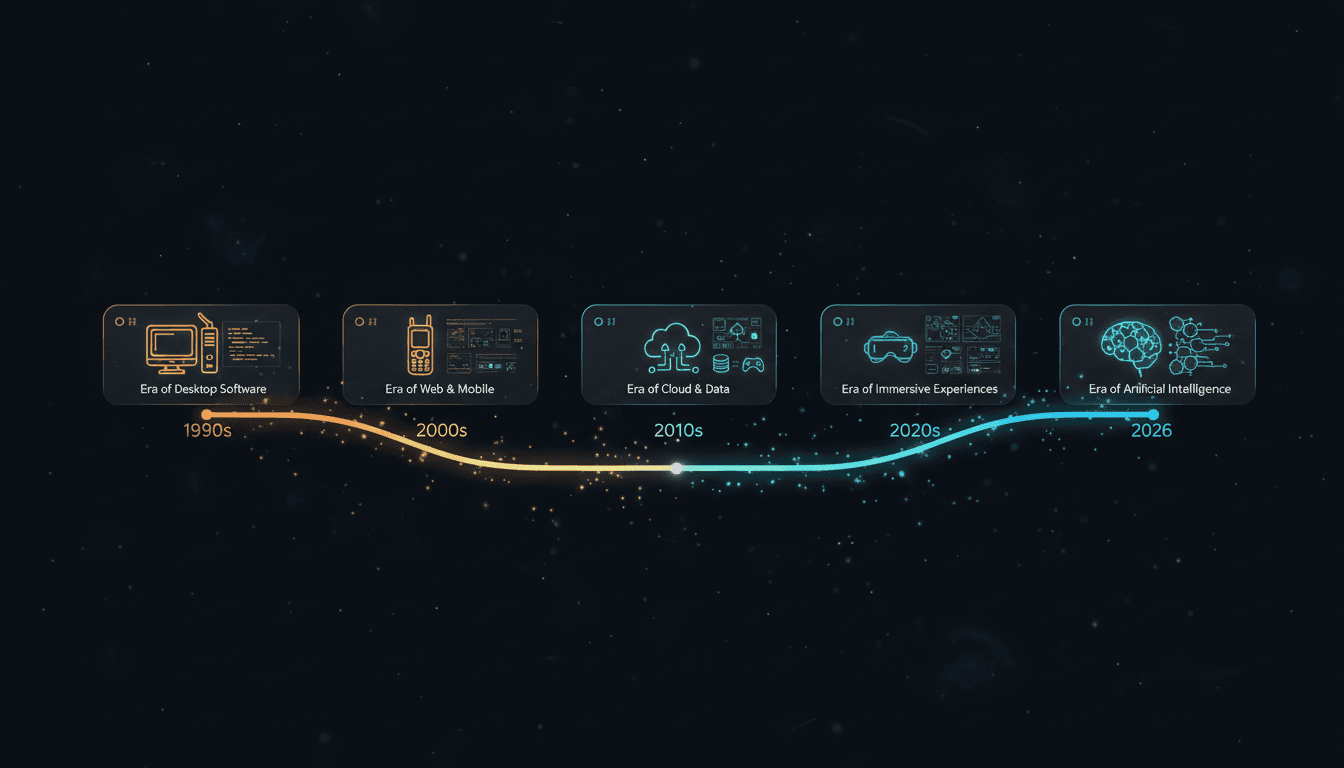
The no-code movement didn't appear overnight. It's the result of 40 years of evolution in how we create software. Understanding this history helps predict where no-code is heading.
The 1980s: Visual Programming Pioneers
The dream of "programming without code" started with tools like HyperCard (Apple, 1987) and Visual Basic (Microsoft, 1991). For the first time, non-programmers could build simple applications using visual interfaces.
HyperCard, bundled free with every Mac, let anyone create interactive "stacks" — essentially apps — using a point-and-click interface. It was ahead of its time, inspiring a generation of creators who would later build the no-code ecosystem.
The 2000s: The Web Democratization
The internet changed everything. Suddenly, creating a "website" was the new creating an "application." And new tools emerged to make it accessible:
- WordPress (2003): turned blogging — then website creation — into a point-and-click affair
- Wix (2006): drag-and-drop website builder for everyone
- Squarespace (2004): design-first website creation
These platforms proved a fundamental thesis: non-technical people can create professional digital products given the right tools.
The 2010s: The No-Code Ecosystem Emerges
This decade saw the birth of the modern no-code stack:
- Airtable (2012): spreadsheets with database power
- Zapier (2011): connect any two apps without code
- Bubble (2012): build full web applications visually
- Webflow (2013): professional web design without code
- Notion (2016): the all-in-one workspace
The term "no-code" itself gained traction around 2017-2018, as the community coalesced around a shared vision.
2020-2022: The Pandemic Acceleration
COVID-19 was a massive accelerator. Companies that needed to digitize operations in weeks, not months, turned to no-code:
- Remote work tools built in days
- Digital customer experiences created from scratch
- Internal processes automated to replace in-person workflows
Investment in no-code startups exploded: $1.3 billion raised in 2020 alone, up 500% from 2019.
2023-2026: The AI Revolution
The integration of AI into no-code is the current revolution:
- AI-assisted building: describe what you want, and AI generates the application structure
- Intelligent automation: AI agents that make decisions within workflows
- Natural language interfaces: configure business logic in plain English/French
- AI-powered templates: industry-specific starting points that AI customizes for your needs
At GrowthPerf, we believe this AI + no-code combination is the most significant shift in software creation since the smartphone.
What's Next?
Our predictions for 2027 and beyond:
- No-code becomes the default: traditional coding reserved for specialized use cases
- AI builds 80% of standard applications: humans focus on strategy and UX
- Open source dominance: self-hosted no-code platforms become mainstream
- Industry verticalization: specialized no-code platforms for healthcare, finance, education